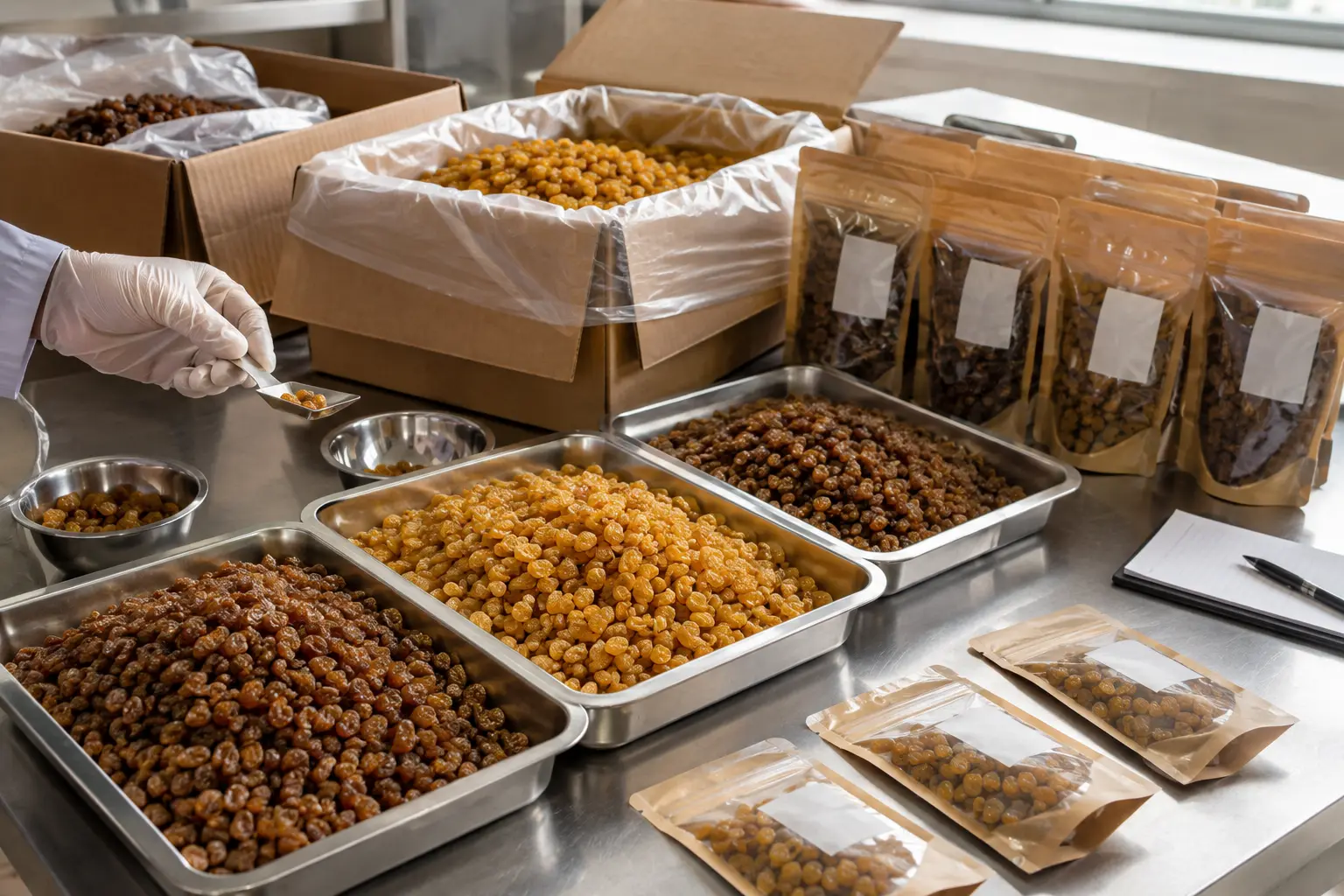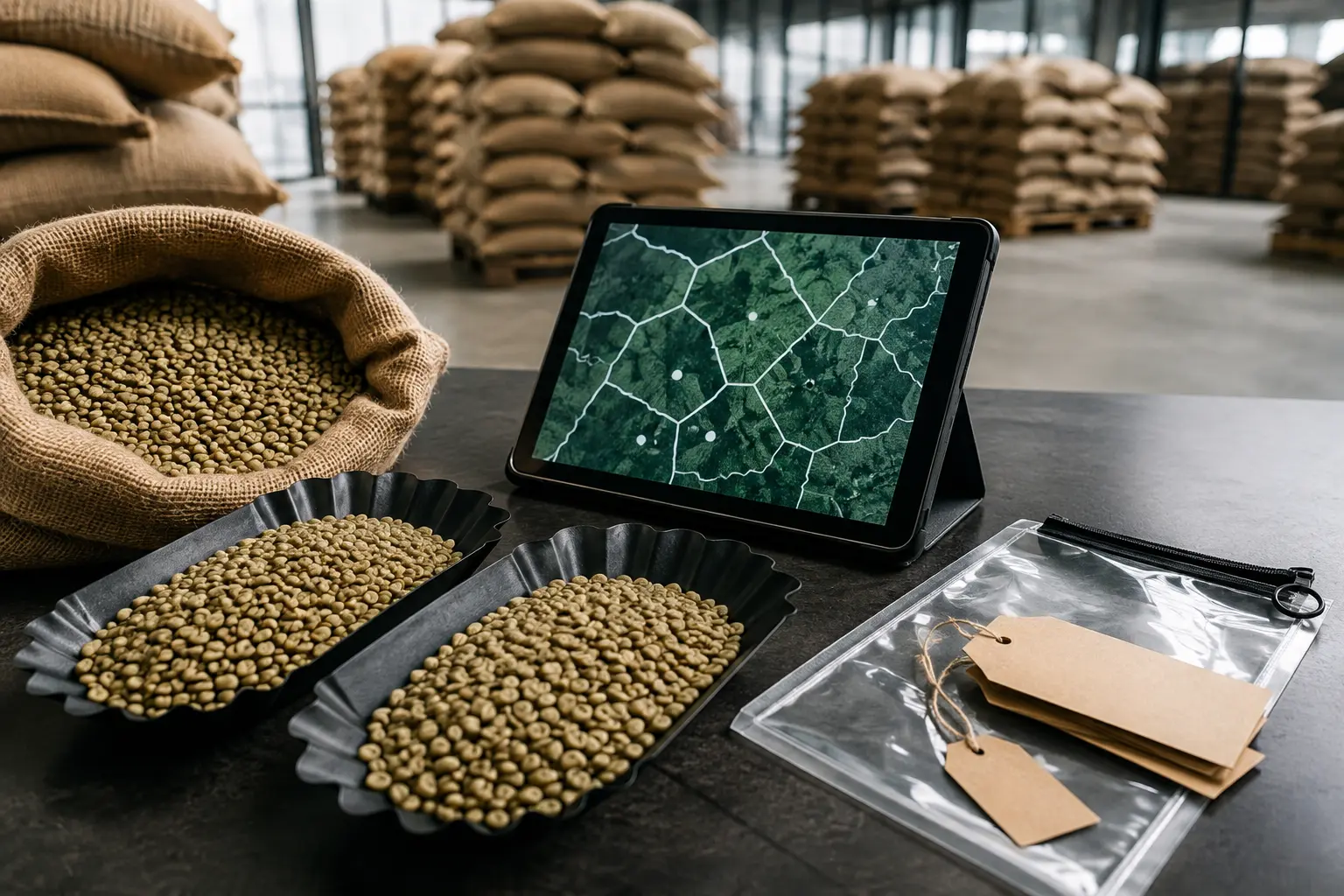
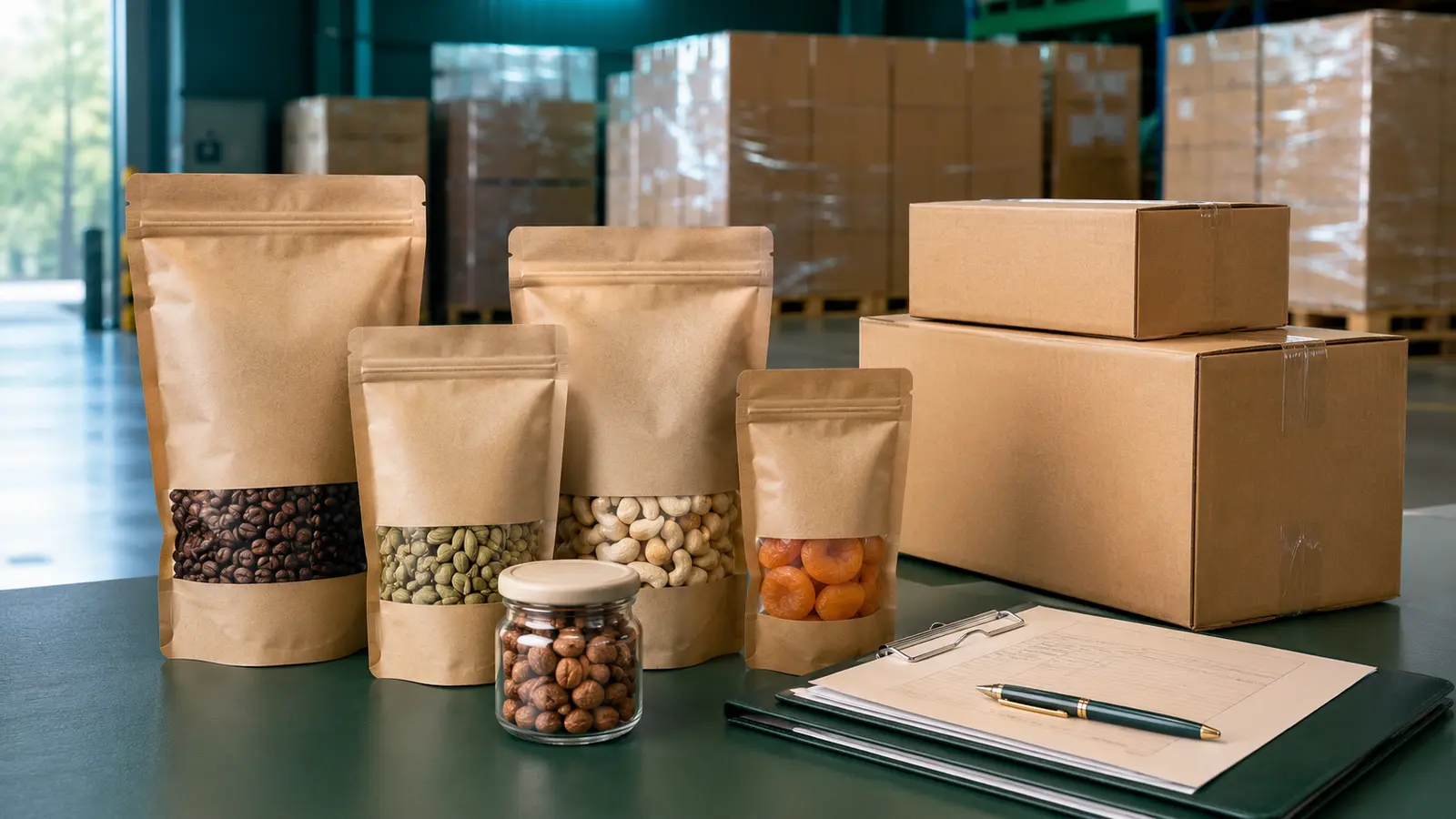
Regulation (EU) 2025/40 on packaging and packaging waste entered into force on 11 February 2025 and, under Article 71 and the European Commission implementation page, generally applies from 12 August 2026. Its scope covers packaging placed on the EU market regardless of material or origin. For a buyer of coffee, spices, nuts or dried fruit, the immediate task is not a blind overnight redesign. It is to know what evidence exists for every packaging format, which operator owns each obligation and when a requirement applies.
Map all three packaging layers. Record sales packaging, grouped packaging and transport packaging separately: pouch or jar, label, zipper, valve, seal, master carton, dividers, pallet film, straps and pallet. For every component, capture material, weight, supplier, function and whether it can be separated manually. This bill of materials exposes how a change intended to improve recyclability may affect food protection, packing-line performance and transport damage.
Separate technical evidence from broad claims. Words such as eco, green or recyclable are not procurement specifications. Ask the packaging manufacturer for the layer structure, component weights, inks, adhesives, coatings and functional barriers. If the pack is multi-material, document how the layers are connected and whether components separate by hand. Any environmental claim should refer to a defined packaging unit or component and connect to traceable technical documentation.
Make food-contact and substances-of-concern evidence a buying gate. A pack that looks suitable may not have a usable declaration for coffee, oil-rich spices, nuts or dried fruit. Request the food-contact declaration, migration-test conditions, food type, contact time and temperature and any restriction for the exact structure. PPWR sets PFAS restrictions for food-contact packaging from 12 August 2026; obtain the relevant supplier declarations and evidence, then align them with other EU food-contact rules and the finished product.
Treat recyclability and minimisation as design projects rather than label edits. Design for recycling, the reduction of unnecessary weight and volume and avoidance of features that merely increase perceived volume belong in the development brief. Looking toward the 2030 design requirements, the buyer should be able to explain material choice, dimensions, headspace and moisture or oxygen barriers through genuine product and logistics needs. Less material is not a success if food safety, shelf life or transport performance deteriorates.
Do not print speculative harmonised labels. PPWR provides a pathway for harmonised material-composition and sorting information, but formats and application dates depend on implementing acts and stated transition rules. Reserve design space, version the artwork and verify the latest EU and national requirements before each production run. Product information and packaging information should remain distinguishable, and any digital carrier should have a controlled data owner.
Resolve operator and extended producer responsibility roles by destination. Product manufacturer, packaging producer, importer, distributor and brand owner may carry different duties. For every Member State, document who first makes the packaged product available, who handles registration and EPR reporting and who supplies material and weight data. Put that responsibility into contracts and the technical-file workflow rather than relying on an informal assumption that the importer will handle it.
Add a packaging acceptance gate to the RFQ. Request material-structure revision, food-contact declaration, restricted-substance evidence, component weights, claimed recyclability basis, seal and leak tests, route-relevant transport testing, product compatibility, artwork version and document owner. A change in resin, adhesive, ink, supplier or thickness should trigger notification and review before commercial production.
PPWR is no longer only a future planning topic. The strongest buyer response is a controlled packaging file that connects product, material, safety, recyclability, labelling, logistics and commercial responsibility. This is an operational readiness framework, not legal advice; the final assessment remains specific to the product, packaging format, operator role and destination market.
Use the guide to improve the brief—not to replace order verification.
Final quantity, sales unit, stock, price and timing remain order-specific.