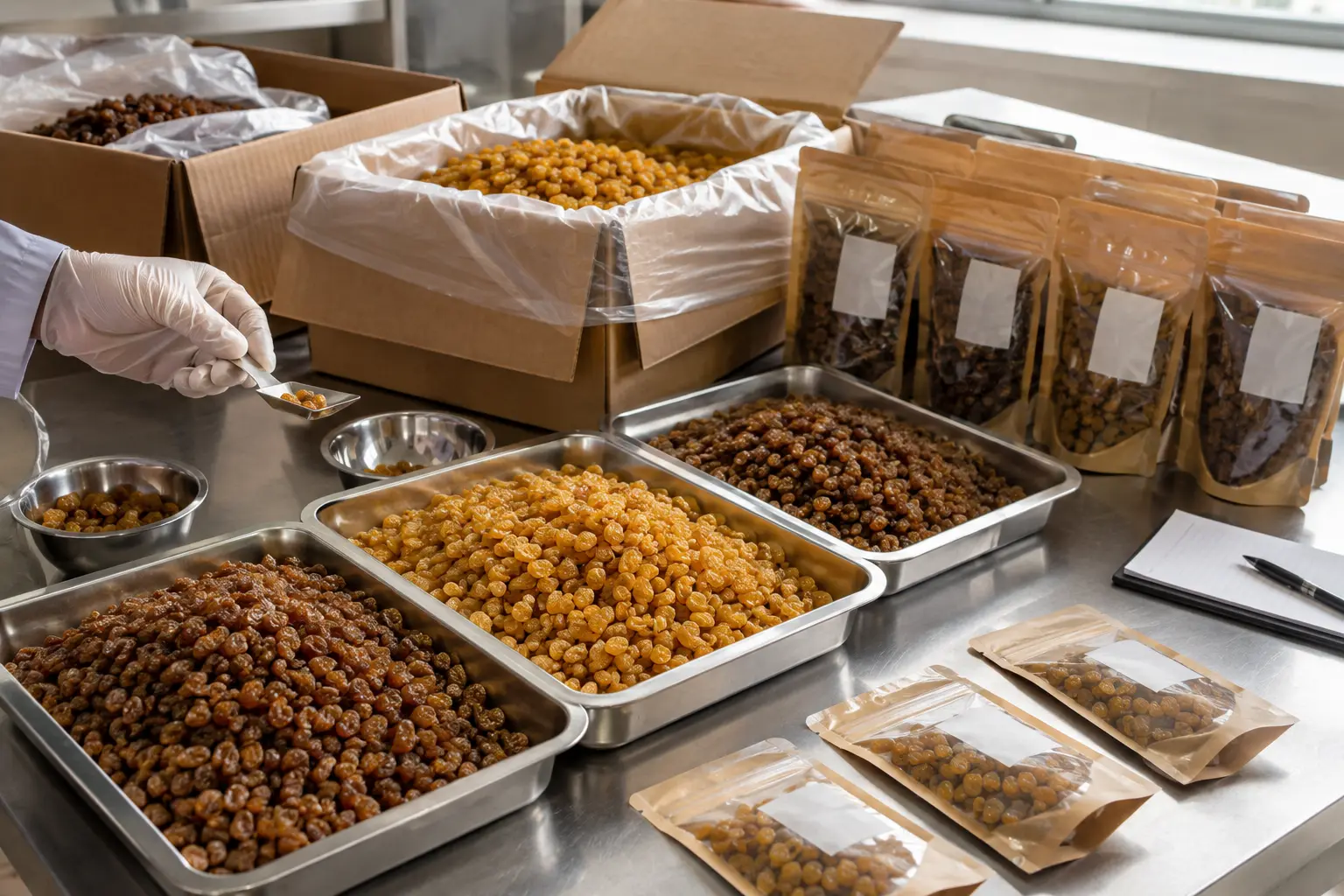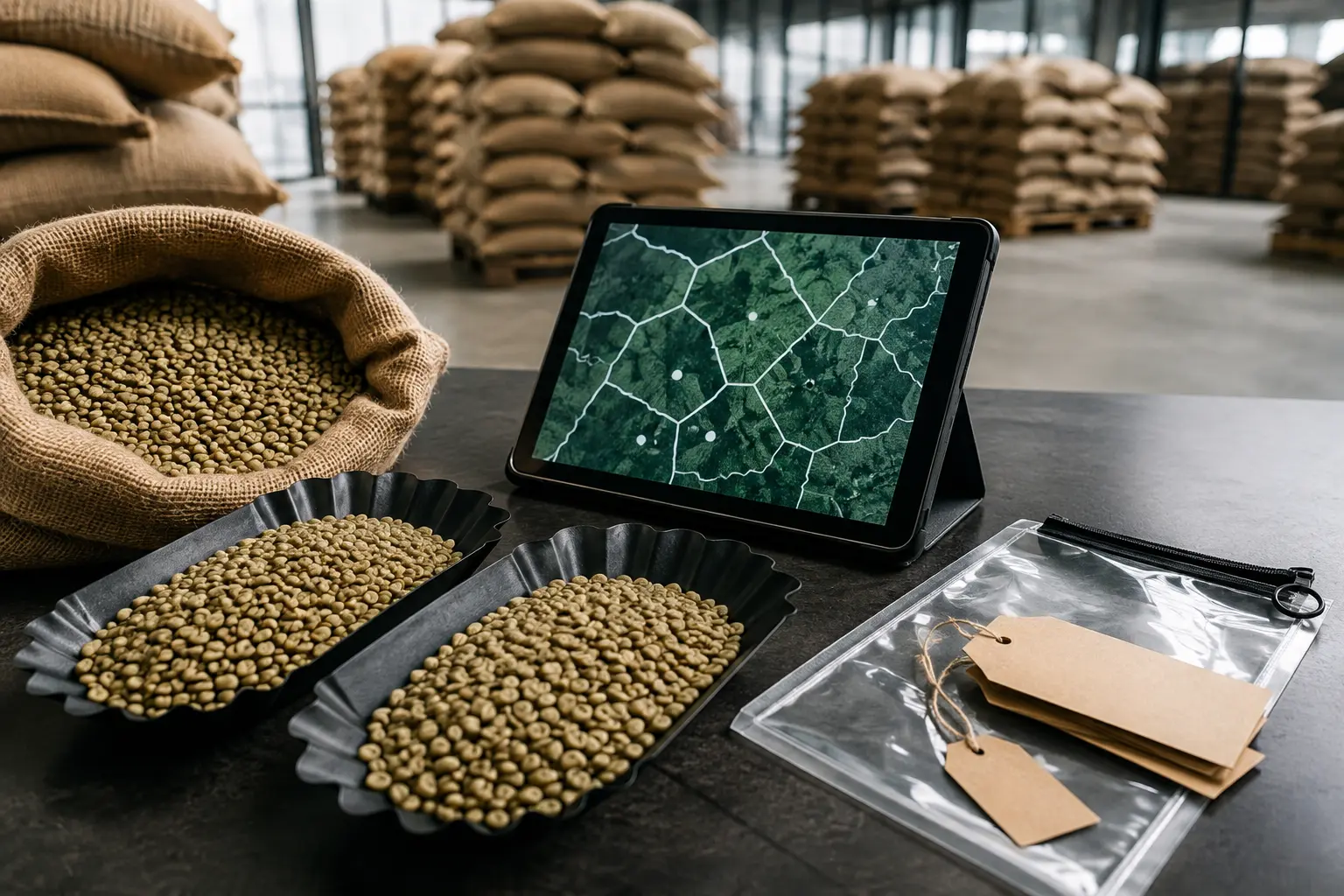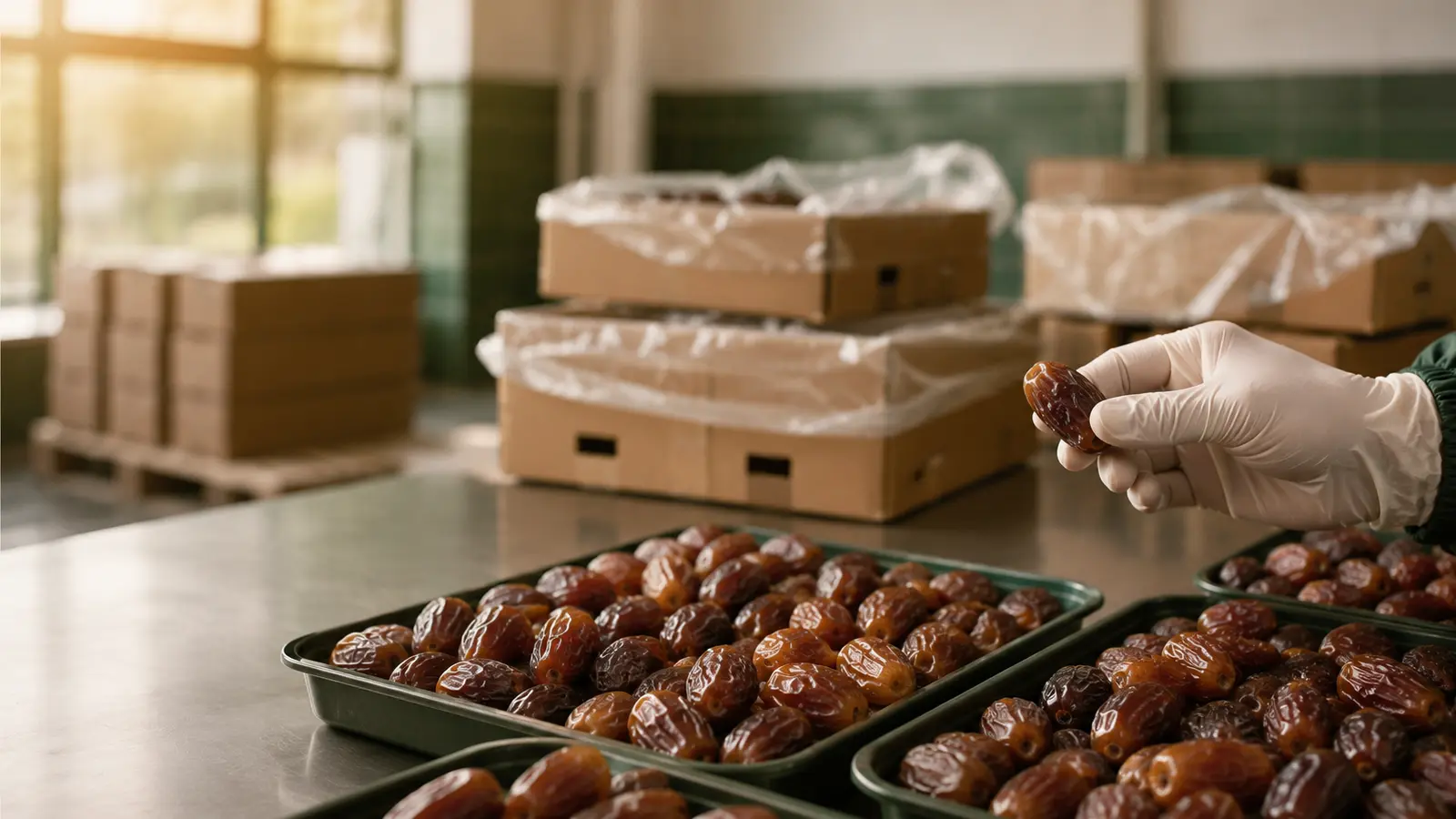
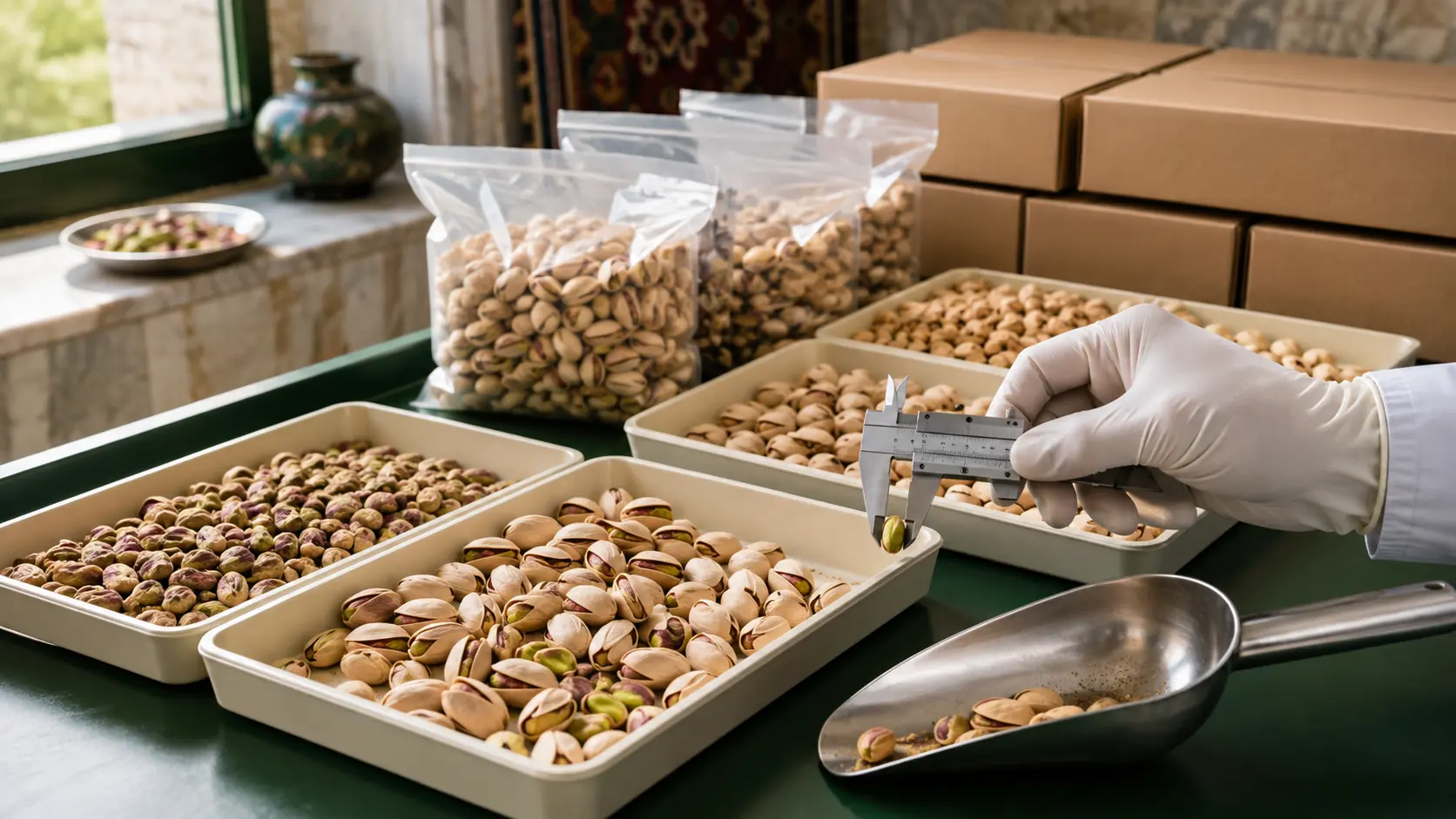
An export pistachio lot cannot be assessed by variety name or appearance alone. Lots sold under the same commercial description can differ materially in count, open-shell ratio, breakage, moisture, fungal risk, uniformity and destination compliance. A useful quotation therefore starts with a written specification, a sampling method and an acceptance rule for each lot.
Define the product before discussing the number. Record the variety or commercial type, in-shell or kernel format, raw or roasted condition, crop year, production region, count range and counting method. Closed shells, mechanically opened nuts, empties, stained shells, broken kernels and foreign matter should each have a stated tolerance.
The approval sample should represent the lot intended for shipment. Agree how many packages will be sampled, how the composite sample will be built and how a retained reference will be sealed. Food-safety testing, including aflatoxin controls where applicable, must match the destination, the product format and the agreed sampling plan.
Packing is part of the specification. Net weight, inner liner, carton or bag strength, batch identification and pallet configuration should be aligned with the route and destination climate. Final acceptance belongs in the contract or written offer; a website image never replaces lot-level verification.
Use the guide to improve the brief—not to replace order verification.
Final quantity, sales unit, stock, price and timing remain order-specific.